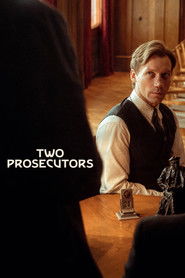
Publisher: Brent Marchant Trust and idealism are certainly noble qualities, but, when taken too far, they can easily morph into naivete and gullibility. And those qualities, in turn, can carry seriously devastating consequences. But what I have difficulty understanding is why anyone would legitimately want to make a film showcasing such an unengaging, uninspired outcome. Is it supposed to be taken as a cautionary tale? A tragedy of epic proportions? A case study of the consequences that come with not waking up in time to smell the coffee? What’s more, circumstances like this are made even worse when the victim in such a scenario can clearly foresee what lies ahead but still falls prey to it anyway. Is this supposed to enlighten us somehow? That’s hard to fathom when we can’t help but see what’s coming (even if the protagonist is unable or unwilling to do so). If you can imagine that, then you have a pretty good idea of what’s behind this patently obvious historical drama from writer-director Sergey Loznitsa. Set in the USSR in 1937 at the height of Josef Stalin’s political tyranny, the picture tells the story of an idealistic young prosecutor (Alexander Kuznetsov) responsible for investigating the complaints of everyday comrades whose “rights” (if they can even be called that) have been violated by the state, particularly operatives of the NKVD, the nefarious Soviet secret police. When he learns that unspeakable abuses have been rampantly doled out against longtime loyal Communist Party members – many of them older, diehard Bolsheviks who truly believed in and fought for the promises of Vladimir Lenin’s revolutionary ideology – he courageously takes up their cause, it being one that he, as a devoted Party himself, firmly supports. And, given the scope of what has been unfolding, he’s well aware of the perilous risk to his own well-being but forges ahead anyway, only to be surprised by the fate that awaits him. But how seriously can this be taken in light of the spot-on suspicions he harbors about what could lie ahead? Frankly, this is where the picture turns wholly implausible; it’s devoid of virtually all meaningful credibility and does little to foster genuine sympathy for its woefully naïve protagonist. Moreover, if this weren’t bad enough, the story plays out primarily through a series of long-winded, belabored conversations, dialogues connected by a series of mundane, exceedingly dull transitionary scenes that play out in tedious, painstaking, slow-motion detail. In short, there are no surprises here, and what does unfold on screen makes watching paint dry look captivating by comparison. Sadly, whatever honorable heroics are meant to be celebrated here are buried under a morass of boredom, predictability and an utter lack of common sense, leaving one wonder what the filmmaker was going for here in the first place.
Publisher: Brent Marchant Trust and idealism are certainly noble qualities, but, when taken too far, they can easily morph into naivete and gullibility. And those qualities, in turn, can carry seriously devastating consequences. But what I have difficulty understanding is why anyone would legitimately want to make a film showcasing such an unengaging, uninspired outcome. Is it supposed to be taken as a cautionary tale? A tragedy of epic proportions? A case study of the consequences that come with not waking up in time to smell the coffee? What’s more, circumstances like this are made even worse when the victim in such a scenario can clearly foresee what lies ahead but still falls prey to it anyway. Is this supposed to enlighten us somehow? That’s hard to fathom when we can’t help but see what’s coming (even if the protagonist is unable or unwilling to do so). If you can imagine that, then you have a pretty good idea of what’s behind this patently obvious historical drama from writer-director Sergey Loznitsa. Set in the USSR in 1937 at the height of Josef Stalin’s political tyranny, the picture tells the story of an idealistic young prosecutor (Alexander Kuznetsov) responsible for investigating the complaints of everyday comrades whose “rights” (if they can even be called that) have been violated by the state, particularly operatives of the NKVD, the nefarious Soviet secret police. When he learns that unspeakable abuses have been rampantly doled out against longtime loyal Communist Party members – many of them older, diehard Bolsheviks who truly believed in and fought for the promises of Vladimir Lenin’s revolutionary ideology – he courageously takes up their cause, it being one that he, as a devoted Party himself, firmly supports. And, given the scope of what has been unfolding, he’s well aware of the perilous risk to his own well-being but forges ahead anyway, only to be surprised by the fate that awaits him. But how seriously can this be taken in light of the spot-on suspicions he harbors about what could lie ahead? Frankly, this is where the picture turns wholly implausible; it’s devoid of virtually all meaningful credibility and does little to foster genuine sympathy for its woefully naïve protagonist. Moreover, if this weren’t bad enough, the story plays out primarily through a series of long-winded, belabored conversations, dialogues connected by a series of mundane, exceedingly dull transitionary scenes that play out in tedious, painstaking, slow-motion detail. In short, there are no surprises here, and what does unfold on screen makes watching paint dry look captivating by comparison. Sadly, whatever honorable heroics are meant to be celebrated here are buried under a morass of boredom, predictability and an utter lack of common sense, leaving one wonder what the filmmaker was going for here in the first place.
Publisher: Brent Marchant Trust and idealism are certainly noble qualities, but, when taken too far, they can easily morph into naivete and gullibility. And those qualities, in turn, can carry seriously devastating consequences. But what I have difficulty understanding is why anyone would legitimately want to make a film showcasing such an unengaging, uninspired outcome. Is it supposed to be taken as a cautionary tale? A tragedy of epic proportions? A case study of the consequences that come with not waking up in time to smell the coffee? What’s more, circumstances like this are made even worse when the victim in such a scenario can clearly foresee what lies ahead but still falls prey to it anyway. Is this supposed to enlighten us somehow? That’s hard to fathom when we can’t help but see what’s coming (even if the protagonist is unable or unwilling to do so). If you can imagine that, then you have a pretty good idea of what’s behind this patently obvious historical drama from writer-director Sergey Loznitsa. Set in the USSR in 1937 at the height of Josef Stalin’s political tyranny, the picture tells the story of an idealistic young prosecutor (Alexander Kuznetsov) responsible for investigating the complaints of everyday comrades whose “rights” (if they can even be called that) have been violated by the state, particularly operatives of the NKVD, the nefarious Soviet secret police. When he learns that unspeakable abuses have been rampantly doled out against longtime loyal Communist Party members – many of them older, diehard Bolsheviks who truly believed in and fought for the promises of Vladimir Lenin’s revolutionary ideology – he courageously takes up their cause, it being one that he, as a devoted Party himself, firmly supports. And, given the scope of what has been unfolding, he’s well aware of the perilous risk to his own well-being but forges ahead anyway, only to be surprised by the fate that awaits him. But how seriously can this be taken in light of the spot-on suspicions he harbors about what could lie ahead? Frankly, this is where the picture turns wholly implausible; it’s devoid of virtually all meaningful credibility and does little to foster genuine sympathy for its woefully naïve protagonist. Moreover, if this weren’t bad enough, the story plays out primarily through a series of long-winded, belabored conversations, dialogues connected by a series of mundane, exceedingly dull transitionary scenes that play out in tedious, painstaking, slow-motion detail. In short, there are no surprises here, and what does unfold on screen makes watching paint dry look captivating by comparison. Sadly, whatever honorable heroics are meant to be celebrated here are buried under a morass of boredom, predictability and an utter lack of common sense, leaving one wonder what the filmmaker was going for here in the first place.
In 1937, amidst Stalin's Great Terror, a newly appointed prosecutor for the USSR is made aware of alleged corruption in the Secret Police, and takes it upon himself to investigate.
watch movie Two Prosecutors english sub, free download Two Prosecutors, Two Prosecutors subbed, full duration Two Prosecutors, Two Prosecutors movie download filmyzilla, Two Prosecutors full movie download mp4moviez, Two Prosecutors movie download kuttymovies, Two Prosecutors movie download moviesda, Two Prosecutors full movie download filmymeet, Two Prosecutors movie download isaimini, Two Prosecutors full movie download vegamovies, Two Prosecutors movie download kuttymovies tamilrockers
based on novel or book, based on true story, joseph stalin, prosecutor, government corruption, historical drama, 1930s, courtroom drama, soviet union history, ussr







Amazing! I love this site
Only Signup is easy and free, finally I can watch this movie Stranger Things with good quality. Thank you!
Been waiting to see this movie for months. and finally came out too
This movie Stranger Things is very nice, with HD quality
Great selection and quality is better than TV Cable, no kidding.
Erin Cochran Cole yes, i am also through this to watch movies
Yes this really works! Just got my free account
One of the best movies I've seen this year!
Excited, Happy Watching guys !!!
Thanks, I'm so glad to be watching this movie
Laura Velez Garcia yes same me too
Sign up was really easy. Less than 1 minute I was hooked up